Organization
Love Your Closet Again – Clean, Organize and Refresh
Is your closet always a mess? Let's plan to make 2026 the year that you finally tame your wild closet and put that chaos to rest.
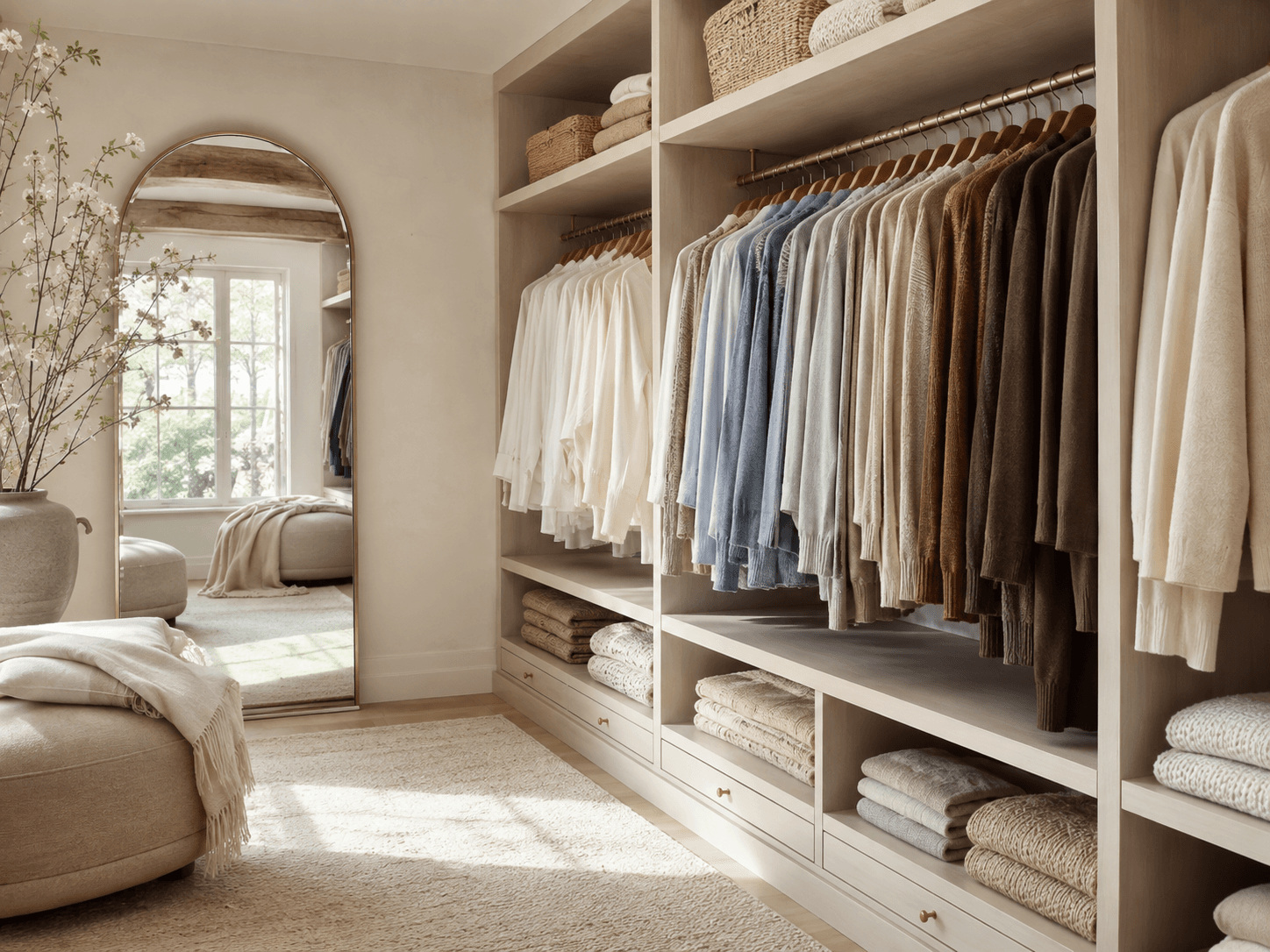
Is your closet always a mess? Does it cause you stress just to figure out what to where or is trying to find your favorite pair of jeans a struggle? Let's plan to make 2026 the year that you finally tame your wild closet and put that chaos to rest!
Come with me and we are going to create a closet that makes you feel good each time you open the door and is easy to maintain. Let's dive in….
1. The Great Removal
To see what you have to work with as far as your closet space and items you want to put in the closet, everything needs to come out for the initial inspection, measure and planning.
Everything that you remove from the closet will need to be divided into categories immediately. Don't think twice, go ahead and get those piles started and label them so you aren't confused as to what is what. We are going to create 4 groups:
- KEEP: Items you love wearing. We want to enjoy wearing every item in the closet without a hesitation. They should make you happy and be comfortable.
- GIVE AWAY or DONATE: These should be in very good condition, but you do not wear any longer or they don't fit. Try to be realistic in what you think you will or won't wear in the future or the weight loss or gain that may or may not happen. The objective is to minimize clothes that really don't need to be in your closet.
- TRASH: These items should be the ones that are stained, torn or no longer something that should be used.
- MAYBE: There are always those items that you're unsure about. Keep a pile just for these types of items to consider later. These will probably not go directly back into the closet but will be considered after all is said and done.
Once you have this part completed, move on to the sub-grouping stage. I suggest you begin sorting by types of clothing. i.e. short sleeve shirts, long sleeve shirts, long pants, shorts, leggings, dresses, combined tops, pants, and dresses, as well as separating outerwear into its own category.
Then you can consider what style of category is best for you. Do you like:
- Color Organization: Do you love to have all your colors together in a fading sequence? Whites, beiges and blacks can all be organized together and in order. If so, organize in the rainbow. This allows you to scan quickly and select easily.
- Seasonal Organizaiton: If you need to reduce your items in the closet by season and swap them out, sort by season. You might need to have only spring/summer in the current closet and then swap it all out for fall/winter. If so, this is the ideal scenario for you.
- Business vs. Casual: Some people enjoy having one side of the closet all business wear and the other strictly casual. If you are one of these individuals, divide and conquer. It will make work days and fun days much easier to plan at a glance.
2. Analysis, Evaluation and Creation
Take out a sheet of paper and write down the measurements of your closet. Evaluate what storage you currently have and consider what your problem areas typically are in the usual layout.
Review the various categories of clothes you have sorted through that need to go back into the closet and do a brief analysis of what it would take to put it all back in the closet and be functional? Here are some questions to ask yourself in this process:
- Do you need more drawer space in the closet? If so, do you have a small dresser that would fit in your closet that you could repurpose?
- Do you need less long hanging space? Maybe you could make that a 2-tier hanging space for shirts and slacks.
- Could you use extra shoe storage?
- Do you have a lot of towels, blankets or large items that need to be stored elsewhere or high overhead?
- Is there anything that can easily be re-arranged without much effort?
- Could you use the back of your door for some type of miscellaneous storage?
- What about the corners of the closet – are they used or wasted with the racks as they are laid out in their current position?
Last, but surely not least, do you need more light? Assess the amount of light in your closet so you can see everything you have to view when you get your clothes back in the closet.
3. Use Smart and Beautiful Closet Organization
By installing a double hanging rod, you can have twice as much hanging space —one designated for shirts and the other for pants—helping prevent items from being crowded or creased.
- Purchase wicker bins or foldable baskets to place on shelves so you can keep folded items neat and prevent clothing tumbling off the shelf. Labeling the bins is also a good idea.
- Add pretty hooks or a valet rod in less used areas to easily store your accessories, jewelry, belts, ties or scarves.
- Consider storage on the back of the door for various uses, including shoes, bags and jewelry.
Consider the possibility of placing some larger blankets or quilts in bins that will slide under your bed, so you have more available space in the closet.
Have as many items as possible in easy access so you can view your options quickly and you don't have to struggle to put items away either.
4. Keeping your Closet Organized
Keeping your closet organized will take just a few minutes each week.
- As you refresh laundry, make sure to keep your strategy in mind and stick to the plan. When you have easy to see and put away items, it makes laundry day quick and easy.
- If clothing needs to be repaired or taken to the cleaners, do this on a regular basis and don't let it pile up.
- If you buy new clothes, consider if anything needs to be removed from your current inventory that you may not wear much anymore.
- It's also great to remember that plans change. Once you live with your plan for a while, you might decide to modify it somewhat and that's great. Give something different a try – it might be even better.
A custom closet designed specifically for you and what you own is your best and most sustainable chance at closet organization success
Related service: Home organization