Organization
The Refined Kitchen: Organizing Your Kitchen with Intention
Before buying a single bin or label, remove everything from cabinets and drawers. Most kitchens are not disorganized because of poor storage—they are overcapacity.
1. Start with a Full Inventory and Hard Edit
Before buying a single bin or label, remove everything from cabinets and drawers. Conduct a decisive audit:
- Discard expired food.
- Donate duplicate tools and small appliances you never use.
- Eliminate "just in case" items that haven't been touched in a year.
Most kitchens are not disorganized because of poor storage—they are overcapacity. Organization begins with reduction.
2. Design by Zones (Function over Location)
Professional kitchen layouts follow workflow patterns. Your organization should mirror how you actually use the space.
Create clearly defined zones:
- Prep Zone: knives, cutting boards, mixing bowls, measuring tools.
- Cooking Zone: pots, pans, cooking utensils, oils, spices.
- Baking Zone (if applicable): mixers, flour, sugars, baking pans.
- Cleaning Zone: dish soap, dishwasher pods, trash bags.
- Storage Zone: pantry goods, wraps, containers
Store items where they are used—not where they "fit."
3. Maximize Vertical and Hidden Space
Most cabinets underutilize vertical height. Optimize with:
- Shelf risers for dishes or canned goods.
- Drawer dividers for utensils.
- Pull-out bins for deep cabinets.
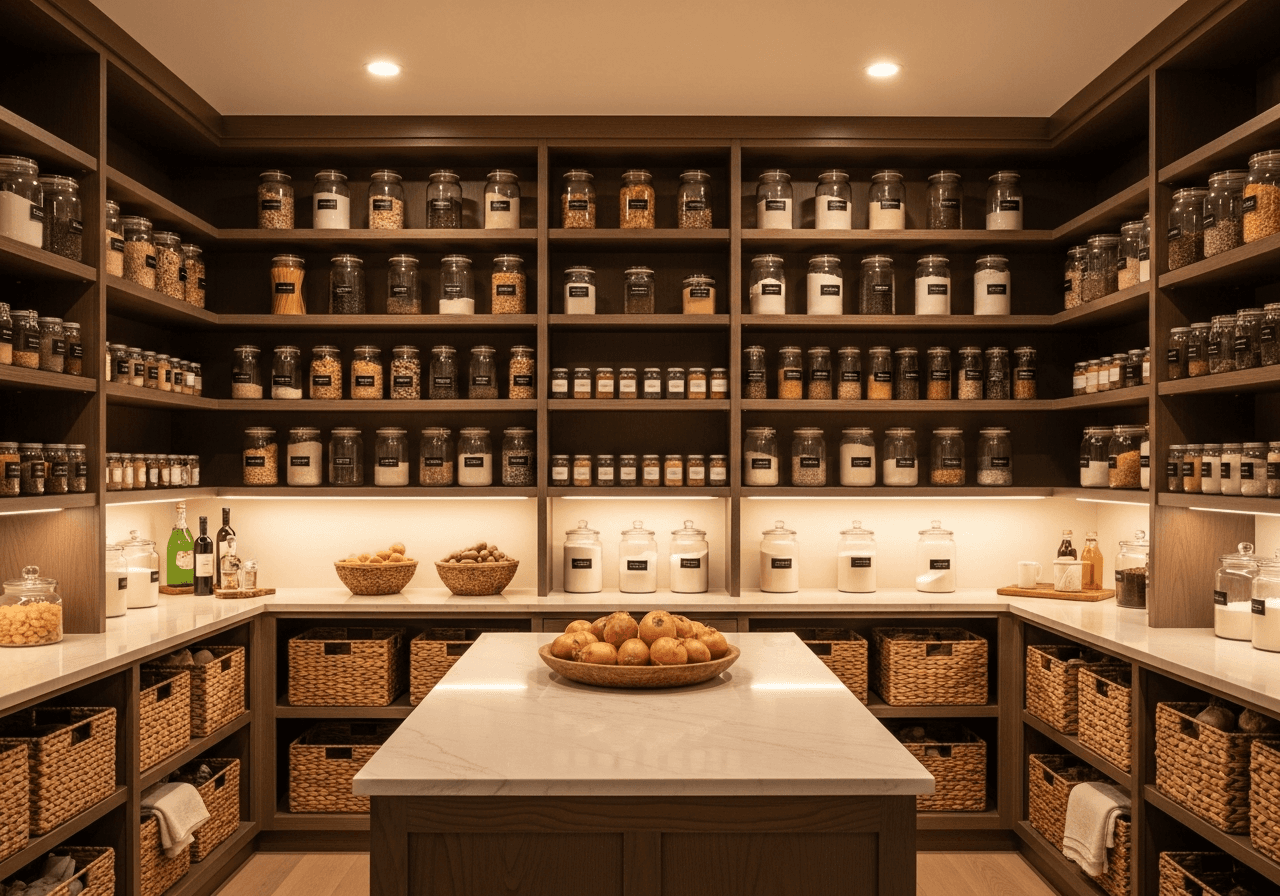
- Clear stackable containers for dry goods.
In pantries, especially, containment creates clarity. Clear bins allow you to see inventory at a glance, reducing overbuying and waste.
4. Establish Container Discipline
Food storage containers are frequently a source of clutter. Implement strict guidelines:
- Keep only one or two consistent brands/sizes.
- Store lids vertically in a divided organizer.
- Match bases and lids before returning them to storage.
If the system feels chaotic, it is not sustainable.
5. Edit Countertops with Intention
Counter space directly affects perceived clutter. Limit what remains visible to:
- Daily-use appliances (coffee maker, toaster if used daily).
- A functional tray for oils/salt if you cook frequently.
- One decorative element (e.g., a bowl of fruit or a small plant).
Every item should earn its place. Visual restraint creates psychological calm.
6. Label for Maintenance, Not Aesthetics
Labels are not decorative—they are operational tools. Label:
- Pantry bins
- High shelves
- Back stock
- Shared family snack areas
When everyone in the household knows where things belong, maintenance becomes easier and the system lasts.
7. Create a 15-minute Weekly Reset
Organization is not a one-time event. Schedule a brief weekly reset:
- Wipe shelves.
- Return stray items.
- Check produce and perishables.
- Restock frequently used zones.
Consistency preserves order more effectively than large, infrequent overhauls.
Final Thoughts
An organized kitchen should feel intuitive. You should not have to think about where things belong. When your systems align with your habits, your kitchen becomes a space that supports you rather than slows you down.
If you approach the process methodically—edit, zone, contain, label, maintain—you will create a kitchen that functions efficiently and feels composed every day.
Related service: Home organization